




Indoor Air

NEW - Indoor Air Monitoring

Alfa Proxima now also provides comprehensive indoor air monitoring through continuous measurement of CO₂ concentrations, PM particles, formaldehyde, total volatile organic compounds (TVOC), temperature, and relative humidity.

This solution is particularly recommended for businesses, schools, preschools, convention centers, municipalities and other organizations, as well as for individual users. In addition to conducting monitoring, Alfa Proxima also prepares regular reports that include an analysis of the results, an assessment of air quality, identified risks, and recommendations for improvement.

Stationary Indoor Air Quality Monitor

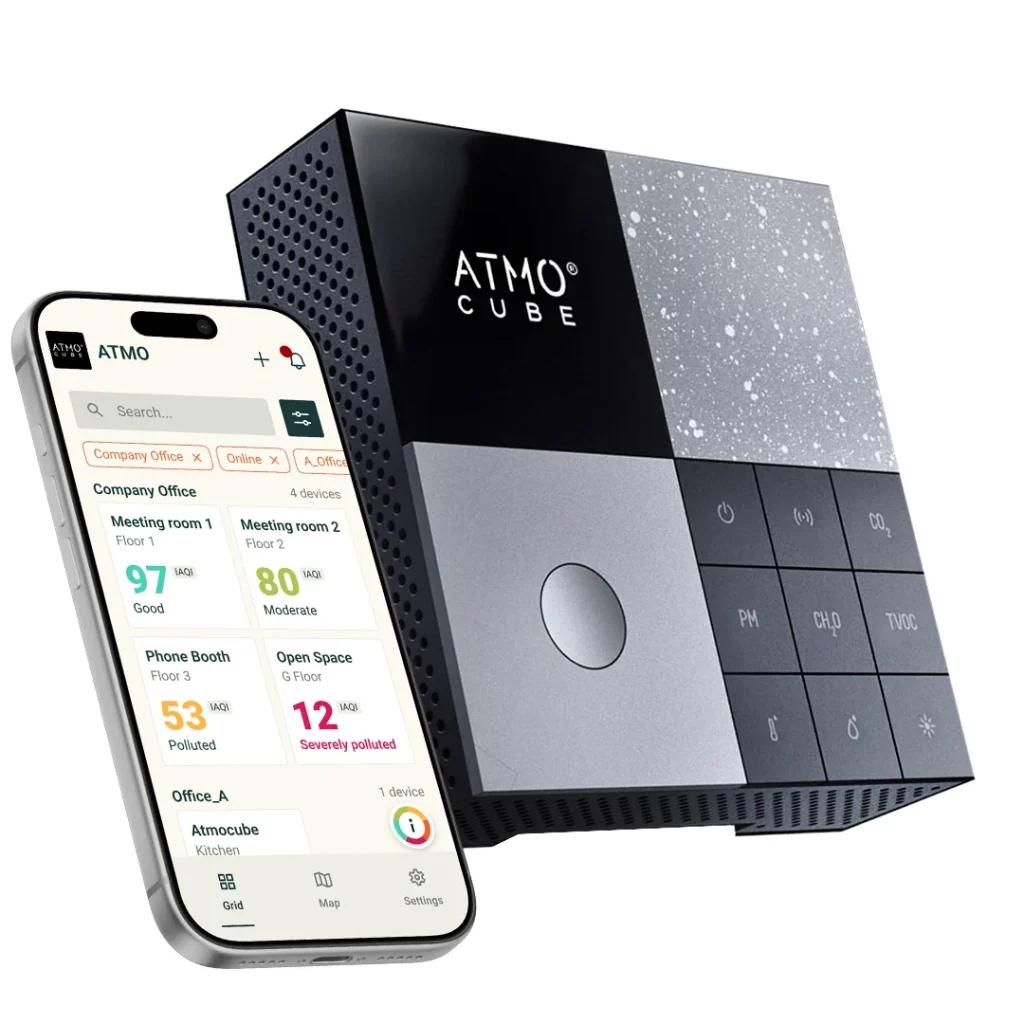
Atmocube is an advanced indoor air quality monitor, that is installed in a room. It is designed for continuous monitoring of conditions in offices, classrooms, preschools, healthcare facilities, and other indoor spaces.

It measures key parameters in real time, such as particulate matter, TVOC, formaldehyde, temperature, relative humidity, and other environmental factors (depending on the execution).

The device enables early detection of deteriorating air quality, allowing users to improve ventilation or adjust the operation of ventilation systems in time. This contributes to improved well-being, higher productivity, and a reduced risk of health issues related to poor indoor air quality.

Portable Air Quality Monitor

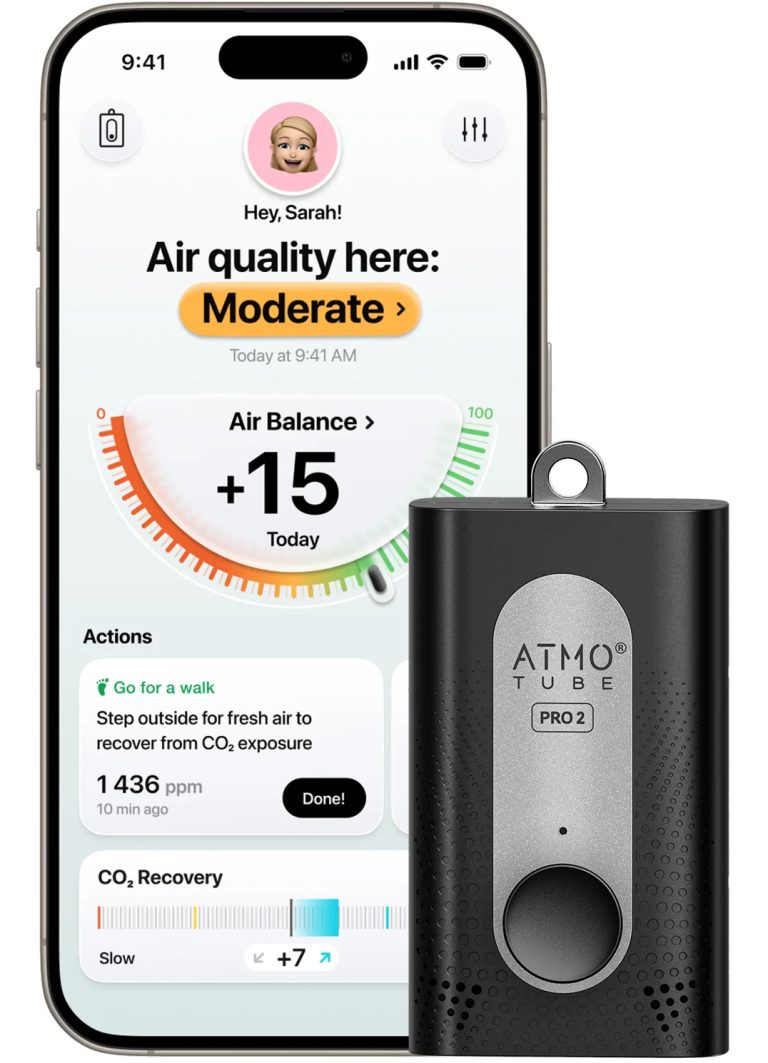
Atmotube 2 is a compact and portable personal air quality monitor that allows users to track their exposure to air pollution during everyday activities. Thanks to its small size, it can be carried in a pocket or bag or attached to a backpack, making it suitable to use at home, at work, while traveling, or outdoors.

The device continuously measures concentrations of PM1, PM2.5, and PM10, as well as CO₂, NOx, TVOC, temperature, relative humidity, and air pressure. The measurements are transmitted via Bluetooth to a mobile app, where the user can monitor current values, view measurement history, receive alerts when air quality deteriorates, and analyze their exposure at various locations.

Atmotube 2 is particularly suitable for individuals who wish to better understand the quality of the air they breathe, as well as for businesses and organizations that conduct field measurements or wish to raise employee awareness about the impact of air quality on health, well-being and work productivity.

Long battery life and built-in memory allow for several days of monitoring without the need for a uninterrupted connection to a phone.

What Affects Indoor Air Quality

CO2 is not only a pollutant but also an excellent indicator of ventilation

High concentration does not pose an immediate danger, but it warns that there is not enough fresh air in the room. Poor ventilation reduces concentrations, increases fatigue, and raises the risk of virus transmission.

PM 10 and PM 2.5 particulate matter is often generated indoors

Particulate matter does not come only from outside. It is also produced by cooking, frying, burning candles, using fireplaces, vacuuming, operating printers, etc.

Harmful Gases and TVOC – Volatile Organic Compounds

Air Quality is also significantly affected by gases and high concentrations of volatile organic compounds, such as formaldehyde, benzene, ammonia, and other volatile organic compounds emitted by furniture, building materials, and cleaning products.

In certain cases, ventilation can worsen air quality

If there is a lot of particulate matter outside due to heating or traffic, opening the windows can make the air quality worse. It is important to ventilate at the right time.

Humidity matters

The ideal relative air humidity is between 40 and 60 percent. If it is too low, it causes dry mucous membranes and eye irritation. If it is too high, it promotes the growth of mold and dust mites.

Air quality is not the same throughout the day

Concentrations of CO2, particulate matter, etc. vary depending on the number of people and the activities taking place in the space (e.g., cooking, cleaning, ventilation). Therefore, continuous monitoring is necessary.

Buildings in line with modern standards

Newer buildings are very well-sealed and therefore energy-efficient. As a result, however, additional measures must be taken to ensure proper ventilation.

Continuous Monitoring of Indoor Air Quality

The Indoor Air Quality monitor, which is installed in a space, is used for continuous monitoring and to alert users when limits are exceeded.

For better health and well-being

Good indoor air quality reduces fatigue, headaches, and other problems caused by poor air quality, and contributes to the well-being of all users of the space.

For improved productivity and focus

Good air quality improves concentration, reduces the number of errors, and increases work and learning efficiency.

For smart building management

Air monitoring allows for the optimization of ventilation, reduces energy consumption, and helps identify problems in the ventilation system more quickly.

To prevent problems

The system continuously monitors air quality, detects deteriorating conditions in a timely manner, and alerts users to the need for action.

Measurements are taken continuously, and the data is automatically uploaded to the cloud, where it is ready for processing, analysis, and display in a user-friendly format.

Would you like to know more about indicative air quality and noise monitoring?

Please contact us and we will be happy to discuss your needs and situation, working with you to find the best possible solution for everyone involved.